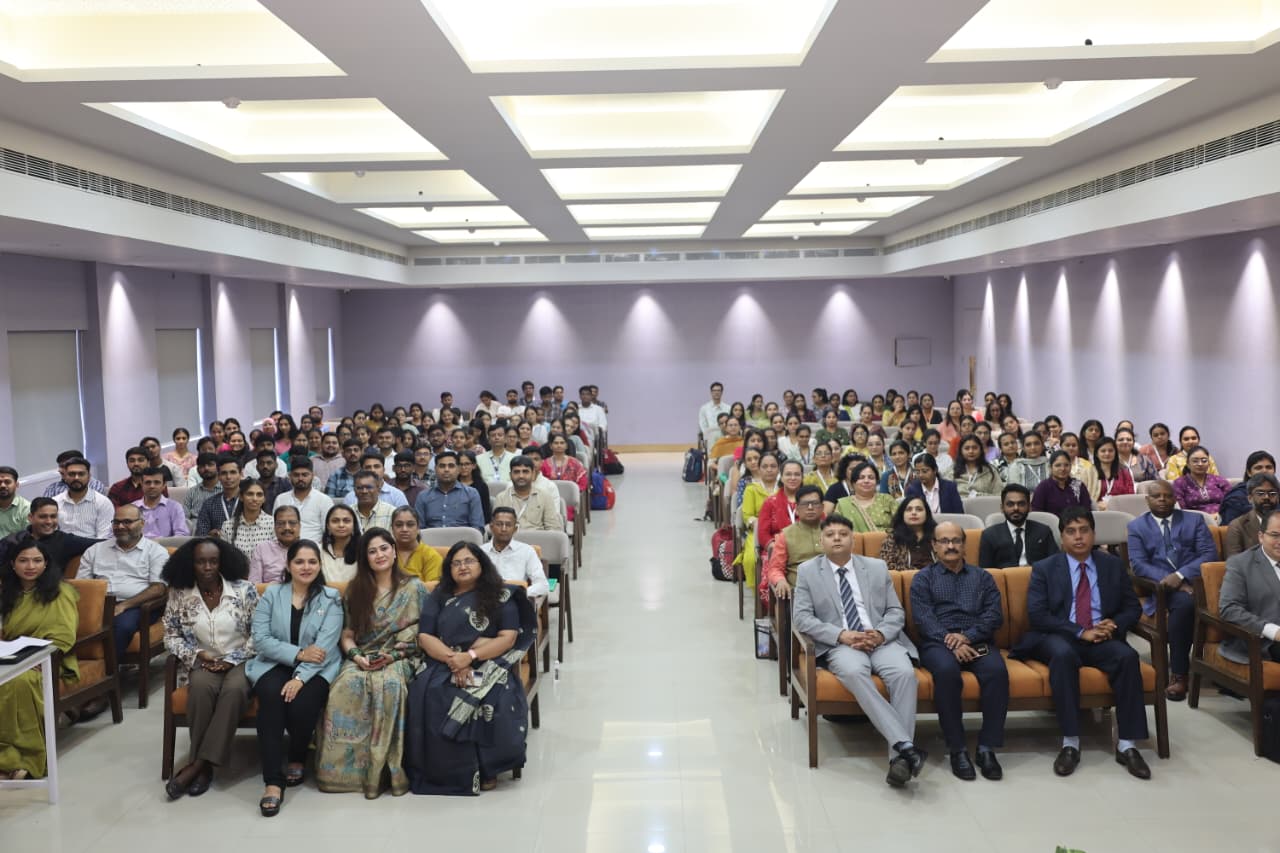
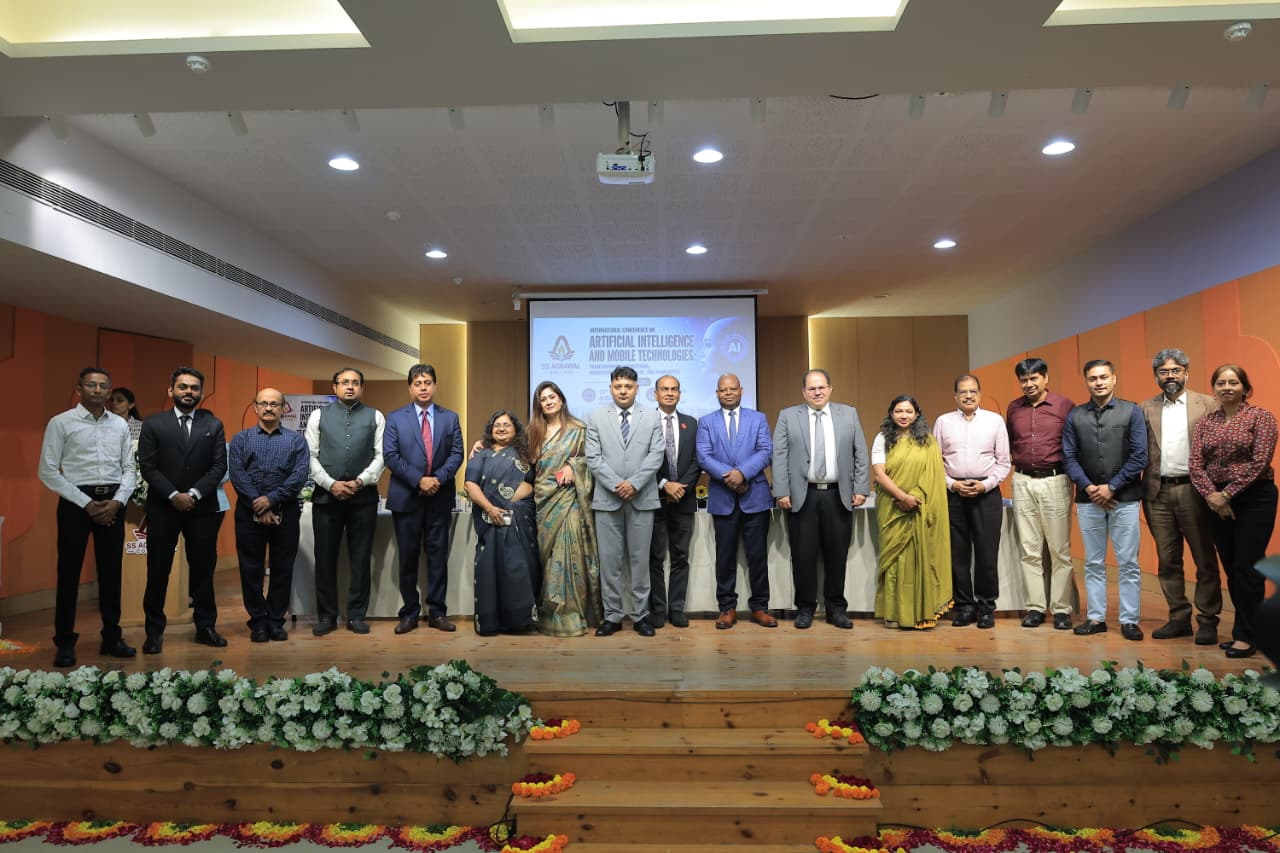
The International Conference on “Artificial Intelligence and Mobile Technologies: Transforming Engineering, Management, Healthcare, and Humanities” brought together distinguished academicians, researchers, industry professionals and experts from India and abroad for two days of insightful academic exchange, research presentation, professional networking and meaningful collaboration.
The conference commenced with the ceremonial lighting of the lamp and prayer, followed by an introduction to the conference. The inaugural session featured addresses by Dr. Nishu Ayedee, Prof. Asokan Vasudevan, Prof. Tareq Hashem, Assoc. Prof. Dr. Marcellin Yovogan and Assoc. Prof. Daba Chowdhury, setting the tone for a conference centred on emerging technologies, innovation and interdisciplinary learning. The session also witnessed the launch of the MentorEdge App, followed by addresses from the Guest of Honour Dr. Buddha Chandrasekhar.
The keynote and panel sessions subsequently brought together a wide range of perspectives on artificial intelligence, digital transformation, research and human potential. Prof. Dr. Anuj Kumar emphasized the importance of ethics, fairness, originality and integrity in research and academic writing. He also highlighted the value of professional networking through the thought-provoking message, “Network is Net Worth,” encouraging participants to build meaningful connections that can lead to future knowledge sharing and collaboration across institutions and countries.
Dr. Nishu Ayedee, through the MentorEdge initiative, highlighted the role of digital platforms in creating accessible mentoring and learning opportunities. Prof. Asokan Vasudevan brought valuable perspectives on AI, digital transformation and innovation, while Prof. Tareq Hashem contributed an international and interdisciplinary perspective to the conference. Dr. Marcellin Yovogan explored the transformative possibilities of AI and mobile technologies, emphasising the importance of innovation and collaboration. Dr. Daba Chowdhury highlighted the evolving relationship between technology and society and the importance of responsible technological adoption.
The panel speeches added another important dimension to the conference. Ms. Ndachie Kainyah (pronunciation – Niyachi Kinaye) contributed perspectives on technology, transformation and emerging opportunities. Mr. Vivekanandhan Koodalingam shared his inspiring motivational journey, reflecting on perseverance, challenges, personal growth and the determination required to move forward. Mr. Mehul Gandhi discussed the evolving relationship between artificial intelligence and human analytical abilities, highlighting how AI can complement human analytical skills while increasingly undertaking analytical tasks. The contributions of Mr. Sunday Clement and Mr. Aminu Masanawa, along with the other expert speakers, further broadened the dialogue around innovation, adaptability, collaboration and the human dimension of technological transformation. The schedule records these keynote, panel and expert sessions across the conference programme.
A major component of the conference was its extensive research paper presentation programme, conducted through offline, online and hybrid modes. The presentations covered a remarkable range of themes, including machine learning, cloud security, sustainability, digital health, educational data mining, digital twins, healthcare marketing, digital transformation, responsible AI, AI in education, deepfake detection, healthcare applications, FinTech, green banking, agriculture, electric vehicles, behavioural finance and many other emerging areas.
The conference provided researchers with an excellent platform to present their work, exchange ideas, receive constructive feedback and connect with fellow scholars and experts. The diversity of research topics demonstrated the growing influence of AI and mobile technologies across engineering, management, healthcare, education, finance, manufacturing and the humanities.
The conference also created opportunities for academic networking and international collaboration, reinforcing the idea that the value of a conference extends beyond individual presentations. The relationships established and ideas exchanged during these sessions can become the foundation for future research, partnerships and professional growth.
Overall, the conference successfully brought together research, innovation, technology, ethics, human intelligence and collaboration on a common platform. It encouraged participants not only to explore what artificial intelligence and mobile technologies can achieve, but also to consider how these technologies can be adopted responsibly, ethically, creatively and in a human-centred manner.
The conference therefore concludes not simply as an academic event, but as a platform that has fostered knowledge, connections, collaboration and new possibilities for the future.